
Boost Your Metabolic Rate with Functional Health

5 Simple Tools to Boost Metabolism - for Good
When you feel out of control of your weight, hormones, and eating habits, those one-stop-shop ads and fitness influencers are really appealing. You stopped on this article because (shocker!) those quick fixes and trendy gadgets - the supplement packs, the “metabolic reset diets”, the apple cider vinegar dose, continuous glucose monitors - just aren’t cutting it, and you’re feeling lost and frustrated.
I’ve got you. Improving your metabolic issues is not a quick fix (don’t panic!), but it is possible - and it’s also FREE - no need to spend loads of cash on trendy gadgets. In this article, I’m going to share my best root-cause fixes to help you regain control of your weight and ditch the diabetic diets for good.
Hi kittens. I’m Hilary Beckwith, ex-dieter and functional nutrition expert. Women with PCOS or who are in perimenopause come to see me with signs of adrenal stress, insulin resistance, and inflammatory conditions, and my job is to find the root causes so we can address their symptoms more effectively and fill in the gaps between their lab values and how their body actually feels. Before you continue, click here to read my Medical Disclaimer.
In this article, you’ll learn:
what is metabolism?
reasons you might be gaining weight (or struggle to lose it)
why the quick fixes and trendy gadgets are not the solution to your metabolic issues
5 science-backed tips to improve metabolism from the ground up
what is metabolism?
I hear the term metabolism commonly - and incorrectly - referred to as one’s ability (or inability) to lose weight or burn calories. It kinda makes sense, after all, to turn food into nutrients and eliminate waste is a sort of form of metabolism. In fact, some would refer to this as metabolic rate.
The fact is, your metabolism and weight gain have very little to do with how many or how few calories you consume. In fact, calorie restriction has been shown to slow metabolism over time [1].
“I eat like a bird, and I still gain weight!” I often hear.
The term metabolism refers to your body’s ability or inability to metabolize glucose into energy. One big side effect of a struggling metabolism is, in fact, weight gain - but metabolism has nothing to do with how easily you burn calories.
And as you approach these perimenopause years, the methods that used to work for you no longer do. I can help.
METABOLISM EXPLAINED
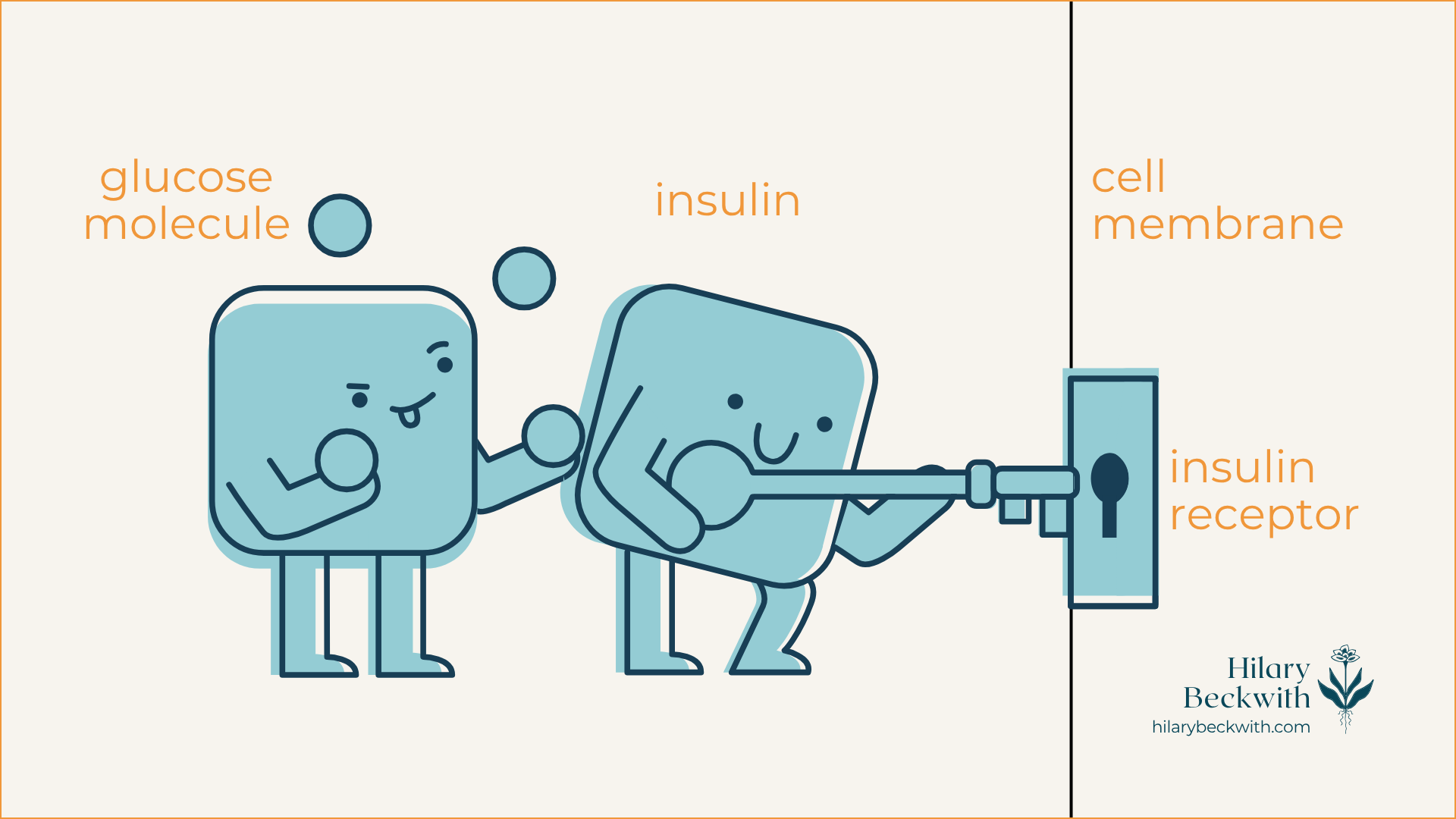
In short, glucose is the molecular form of sugar that is used to create energy within the mitochondria of cells in the form of ATP, or Adenosine TriPhosphate. Glucose is broken down from all types of carbohydrates, including starchy vegetables, legumes, grains, and yes, sugars. To some extent, glucose can also come from proteins and fat in someone who has a healthy metabolic flexibility.
When dietary carbohydrates are broken down into glucose, insulin from the pancreas acts as a key-holder that unlocks the door to the cell (insulin receptor) and shuttles glucose in for energy production. Once cells have had their fill, the remaining glucose is converted into stored forms of glucose and stored in the liver and fat tissue.

non-calorie causes of slow metabolism and weight gain
You read earlier that excess glucose that cannot be used to create ATP is stored as fat tissue, so diet is certainly a factor in metabolism - but it’s not about how many calories are consumed.
In fact, did you know that carbohydrates have less than half the calories per gram than fat does? And yet, it’s not dietary fat that’s causing you to gain weight - it’s carbohydrates.
Wait, wait, WAIT, Hilary - I thought you were anti-diet…
I WANT TO BE VERY CLEAR - I am not villainizing carbohydrates. I love carbs, and our bodies need a balance of macronutrients, including carbohydrates. But for the sake of understanding metabolism and why you are struggling with weight loss, it’s important to understand the health effects of a high-starch or high-carbohydrate diet, in conjunction with a lack of quality protein and fat. And it is especially important to understand that health and weight loss should always be addressed based on the unique needs of each individual.
4 COMMON CAUSES OF WEIGHT GAIN THAT OFTEN GET OVERLOOKED
INSULIN RESISTANCE - This is metabolism at its core - if your cells shut out insulin, your metabolism will struggle, and you will gain weight as fat (more on this later). This is often caused by diet, low muscle tone, as well as the depletion of estrogen during perimenopause, which causes a major decline in insulin sensitivity.
UNADDRESSED GUT PATHOGENS - Overgrown pathogens in the gut, like yeast, bacteria, h. pylori (also a bacteria, but found in the stomach), mold, or parasites (yes, parasites!), will cause the body to inhibit the breakdown of fat (lipolysis).
PROLONGED INFECTIONS - Infections like the ones just discussed will cause the liver to release more fat and sugars into the bloodstream, encouraging the body to store more fat. Additionally, these infections cause the body to preserve calories for immune function, rather than energy production.
PROCESSED FOODS (I know…) - When your body doesn’t know what to do with something, it stores it as fat. Binders, fillers, chemicals, preservatives, and plastics from processed food products must all be dealt with by the liver, neutralized, and eliminated. When the liver is overburdened and elimination pathways are not clear, these products remain in the body and get stored in fat tissue. Your body will make more fat tissue to accommodate these storage needs.
This is exactly why the expensive, trendy gadgets are not the solution to your metabolic health. Let’s dig into it more.
improving metabolic health is free
You do not need the expensive, trendy gadgets and trackers to improve metabolic health. I know the ads and influencers can be very convincing, and there can be some value in the data they provide.
However…
Most often, what I see with clients who use gadgets like CGMs (continuous glucose monitors), Aura rings, sleep apps, calorie-tracking apps, and other wearables is an obsession over fixing the data, rather than a tool for understanding. This is a form of disordered eating behavior known as orthorexia.
They disconnect from what their body actually needs, and obsess over food restrictions and looking at the data. In doing so, they become less present with themselves and others, and they begin to loathe food, rather than enjoy it.
Sure, that CGM is helpful to understanding which foods have a negative impact on blood sugar, but finding and addressing the root causes of the blood sugar dysregulation is far more effective long-term than obsessively chasing numbers.
5 ways to improve metabolic health - for good
I want to be clear - I do not believe weight is an indicator of health. I never ask my clients to step on a scale, and I am a Health At Every Size (HAES) advocate. I firmly believe that all bodies can be healthy.
But, as someone who grew up in what I call the Fat-Free Era, obsessed about my body shape and size, shrunken with shame, and and shrouded in disordered eating behaviors, I know what it can feel like to have this weight creep on without explanation, and feel out of control - or worse - like I did something wrong (thanks, trauma!).
I’m not here to tell you you need to lose weight - I am here to help you make sense of your metabolic health so you can feel more in control of your health, and reconnect with your body’s needs.
With that, here are 5 ways to improve metabolic health from the ground up:
PRIORITIZE STRENGTH + RESISTANCE TRAINING OVER CARDIO
Building muscle is essential to improving insulin sensitivity, and involves regular lifting and adequate consumption of quality protein - especially in perimenopause and post-menopause years. Yes, endurance cardio can be more effective at burning fat, but that does not improve insulin resistance in the long term, whereas strength training does. CLICK HERE to read more about how protein and muscle building improve insulin sensitivity and metabolic issues.
PRIORITIZE SLEEP
Yes, really! Sleep is when your body does most of its healing and detoxifying, which, as you learned earlier, plays a significant role in how your body makes, metabolizes, and stores fat. Sleep is when your brain sweeps out toxic byproducts from the day’s events, it’s when your liver function is at its highest, and when tissues heal. CLICK HERE to learn more about managing sleep and stress.
INCORPORATE A (SAFE) FASTING ROUTINE
Fasting is not something everyone should do. And it certainly isn’t something anyone should jump into, feet first. But fasting has immense benefits on cellular health, gut health (including the clearing of pathogens we discussed earlier), improves insulin sensitivity, and improves metabolic flexibility, which helps your body adapt to burning fat when glucose stores are low. And the most important part about fasting when it comes to addressing metabolic issues - is what you eat AFTER you fast. CLICK HERE to learn more about how to fast, when to fast, who should (and should not) fast, and how to refeed your body after a fast to support healthy metabolism.
PRIORITIZE WHOLE FOODS (AND LEARN TO SPOT HEALTH SCAMS ON PACKAGED FOODS)
Working in functional nutrition, I often see that clients are confused about what is healthy and what is not, because MARKETING. Food marketers are paid to get you to buy their product - period. That said, there are so many foods marketed as being “healthy” that are still just processed garbage. Not all packaged foods are bad, but the easiest way to remove processed foods and improve your metabolic issues is to prioritize whole foods over packaged. And because that isn’t always the easiest option for someone who is very busy or isn’t comfortable in the kitchen, I've developed this online course to help you learn what to look for on ingredient lists so you can make the best choice for your body.
PRIORITIZE QUALITY PROTEIN AND NON-STARCHY VEGETABLES AT EVERY MEAL
Making protein and fiber a priority at every meal is one of the easiest ways to improve metabolic issues. Smoked salmon on a bed of greens and sauerkraut for breakfast, grass-fed beef stir-fry over cauliflower rice and lots of veg for lunch, and maple-mustard roast chicken and veg for dinner. Prioritizing protein and non-starchy veg keeps you full for longer periods of time and improves your metabolic flexibility and sugar cravings. CLICK HERE to read more about the importance of protein.
was this helpful?
Please share your thoughts and questions in the comments below.
Want options for finding and addressing the gut pathogens discussed earlier?

NUTRITION SERVICES
ADDITIONAL RESOURCES


BLOG REFERENCES
Knuth ND;Johannsen DL;Tamboli RA;Marks-Shulman PA;Huizenga R;Chen KY;Abumrad NN;Ravussin E;Hall KD; “Metabolic Adaptation Following Massive Weight Loss Is Related to the Degree of Energy Imbalance and Changes in Circulating Leptin.” Obesity (Silver Spring, Md.), U.S. National Library of Medicine, pubmed.ncbi.nlm.nih.gov/25236175/. Accessed 19 Nov. 2025.